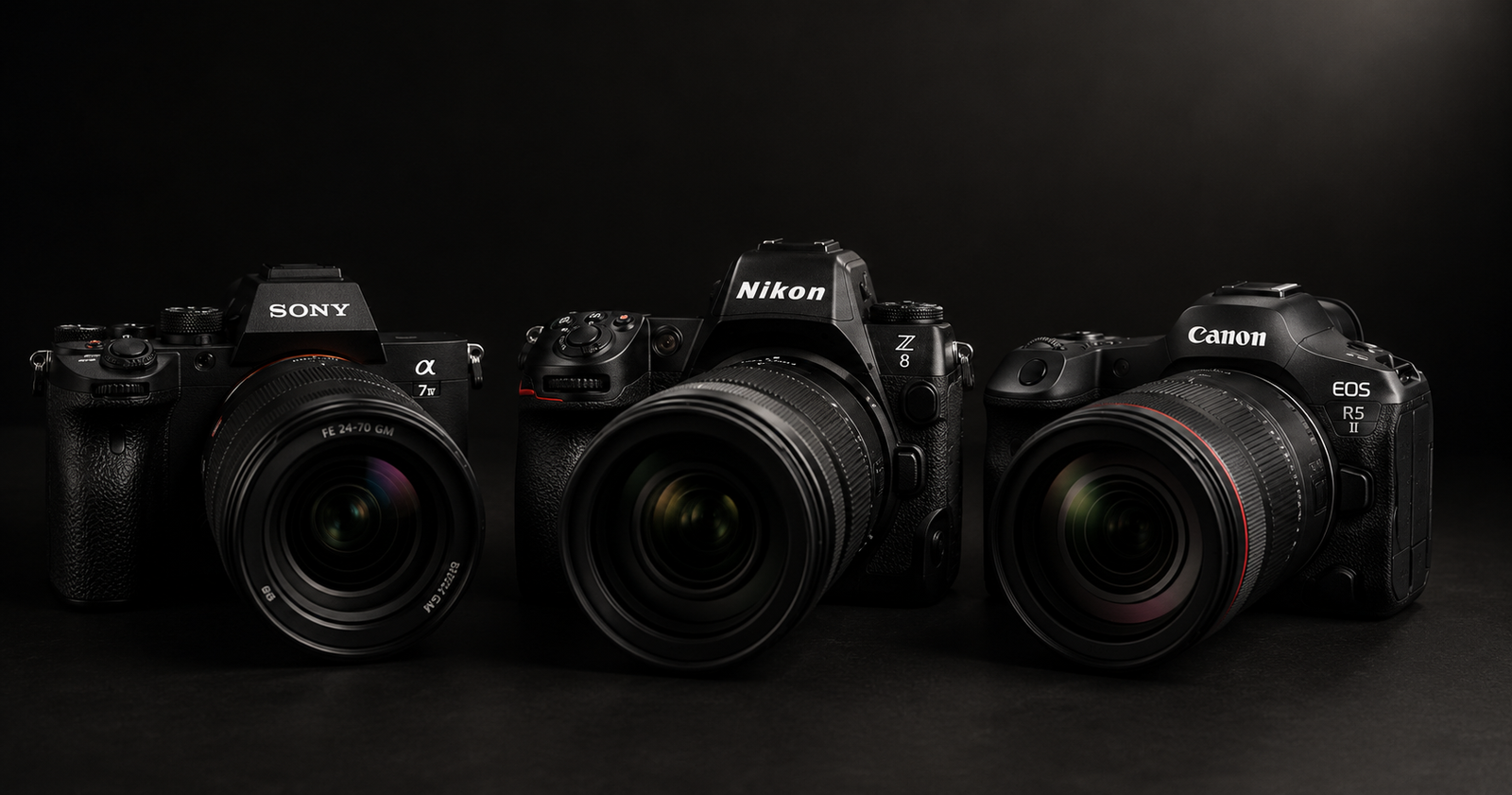
Choosing the right Professional Camera for Photography can transform the way you capture every moment. Modern cameras offer faster focusing, better image quality, and advanced technology for both photos and videos. Whether you specialize in portraits, landscapes, wildlife, or weddings, investing in a reliable camera helps you produce stunning results in every situation.
Today’s professional photography camera models feature impressive Full-frame camera sensors, intelligent Autofocus performance, and excellent Camera image quality for professional-level results. With so many options available, understanding your needs, budget, and photography style is the key to finding the perfect Best mirrorless cameras that will support your creativity and deliver outstanding performance for years to come.
How We Selected the Best Cameras for Photography in 2026
Finding the best cameras for photography in 2026 takes more than reading specification sheets. Every camera in this guide was evaluated based on practical performance rather than advertisements. We spent time comparing image quality, handling, reliability, and overall shooting experience. A camera should help you capture great photographs without slowing your creativity.
We also considered long-term value. Many photographers invest in a camera for several years, so we examined software support, available Interchangeable lenses, battery life, and system growth. Whether you want a Full-frame camera, an APS-C camera, or a Medium format camera, our recommendations are designed to meet different budgets and photography goals.
Our Camera Testing and Evaluation Process
Every camera was tested in real shooting situations instead of controlled studio conditions alone. We photographed landscapes, portraits, wildlife, sports, city streets, and indoor events. This approach revealed how each model handled changing light, fast-moving subjects, and challenging environments.
We carefully measured Autofocus performance by tracking people, birds, animals, and moving vehicles. We also evaluated Image stabilization during handheld photography and tested Low-light photography after sunset. Cameras that consistently delivered sharp, clean images received higher scores.
Another important factor was Camera image quality. We examined color accuracy, detail retention, noise control, and Dynamic range. A camera should preserve highlights and shadows while producing natural colors that require less editing afterward.
Modern photographers often create videos as well as still images. For that reason, we also tested Video recording capabilities, recording limits, overheating, frame rates, and ease of use. Cameras with better hybrid performance ranked higher because they offer greater flexibility for today’s creators.
Key Factors We Considered Before Ranking Each Camera
Choosing the best cameras for photography in 2026 required a balanced scoring system. Instead of focusing on one feature, we evaluated the complete experience each camera provides.
The first factor was sensor technology. Cameras with a High-resolution sensor captured finer details, making them ideal for commercial work, wildlife, and landscape photography. However, resolution alone does not guarantee better results. Good image processing and lens quality also play major roles.
Next came usability. A responsive menu system, comfortable grip, bright Electronic viewfinder, and customizable controls help photographers work faster in real situations. These small details become important during weddings, sports events, or travel photography.
Durability was another deciding factor. A strong Weather-sealed camera body protects your equipment from rain, dust, and cold temperatures. Outdoor photographers especially benefit from cameras that continue working in difficult environments.
Speed also mattered. Fast Continuous burst shooting allows photographers to capture birds in flight, fast sports, or unpredictable wildlife moments. Cameras with advanced subject detection and reliable tracking received better overall ratings.
Finally, we compared price against performance. Some premium cameras deliver incredible technology, while others provide excellent value at a much lower cost. Our goal was to recommend cameras that truly deserve your investment.
Who This Camera Guide Is For
This guide is written for every photographer, regardless of experience. If you are buying your first camera, you need simple recommendations that avoid technical confusion. If you already own professional equipment, you need honest comparisons based on performance rather than brand loyalty.
Beginners will discover which Camera for beginners offers the easiest learning curve without sacrificing image quality. Hobbyists will learn which camera provides the best balance of performance and affordability. Professionals can compare flagship models built for demanding commercial work.
Whether your passion is travel, portraits, weddings, wildlife, or content creation, this guide helps you find the right tool. Instead of recommending the most expensive camera, we focus on the camera that best matches your needs, photography style, and future goals.
Quick Comparison of the Best Cameras in 2026
Choosing the best cameras for photography in 2026 becomes much easier when you compare the most important features side by side. Every photographer has different priorities. Some value speed, while others focus on image quality or portability. The cameras below represent the best options for professionals, enthusiasts, travelers, and beginners.
The table compares sensor size, resolution, video performance, and ideal use cases. Whether you need a Professional photography camera, a lightweight travel companion, or one of the Best mirrorless cameras, this comparison helps you identify the right model before diving into detailed reviews.
Best Cameras for Photography in 2026 Comparison Table
| Camera | Sensor Type | Resolution | Best For | Video | Price Range |
| Nikon Z8 | Full-frame camera | 45.7 MP | Professional Photography | 8K | $$$$ |
| Canon EOS R5 II | Full-frame camera | 45 MP | Hybrid Photo & Video | 8K | $$$$ |
| Sony A7 IV | Full-frame camera | 33 MP | All-Round Photography | 4K 60fps | $$$ |
| Fujifilm X-T5 | APS-C camera | 40 MP | Everyday Photography | 6.2K | $$$ |
| Nikon Z6 III | Full-frame camera | 24.5 MP | Value & Low Light | 6K RAW | $$$ |
| Sony A7CR | Full-frame camera | 61 MP | Travel & High Resolution | 4K | $$$$ |
| Fujifilm GFX100S II | Medium format camera | 102 MP | Landscape & Commercial Work | 4K | $$$$$ |
| OM System OM-3 | Micro Four Thirds | 20 MP | Wildlife & Travel | 4K | $$ |
Which Camera Delivers the Best Overall Performance?
If you want one camera that excels in almost every situation, the Nikon Z8 is difficult to beat. It combines a High-resolution sensor, exceptional Autofocus performance, professional-level Video recording capabilities, and rugged construction. From portraits to wildlife and commercial photography, it consistently produces outstanding results.
Canon’s EOS R5 II follows closely behind. It offers outstanding hybrid performance for photographers who also create videos. Sony’s A7 IV remains one of the most balanced choices because it delivers excellent features at a more affordable price, making it one of the strongest options in any Mirrorless camera comparison.
Best Camera for Beginners
New photographers often assume they need the most expensive camera. In reality, learning photography is easier with equipment that feels comfortable and intuitive. The Fujifilm X-T5 stands out as the ideal Camera for beginners because its simple controls encourage creativity without sacrificing professional image quality.
The Sony A7 IV is another excellent choice for beginners who plan to grow into professional photography. Its user-friendly interface, dependable Electronic viewfinder, and extensive lens selection make it a smart long-term investment that can serve you for many years.
Best Camera for Professional Photographers
Professional photographers demand consistency. Every assignment requires reliable focusing, durable construction, and excellent performance under pressure. The Nikon Z8 delivers exactly that with industry-leading Continuous burst shooting, advanced subject recognition, and outstanding Dynamic range.
The Canon EOS R5 II is equally impressive for professionals who regularly switch between photography and filmmaking. Its advanced video tools, responsive autofocus, and impressive Low-light photography performance make it a favorite among wedding photographers, commercial creators, and content producers.
Best Camera for Travel Photography
Travel photographers need a camera that combines excellent image quality with a compact design. The Sony A7CR offers remarkable portability while featuring a 61-megapixel sensor. Despite its small size, it produces incredibly detailed images suitable for large prints and commercial work.
Photographers who value lightweight gear should also consider the Fujifilm X-T5. Its compact body, classic controls, and excellent battery life make it an outstanding travel companion. Combined with lightweight Interchangeable lenses, it creates a versatile system that is easy to carry throughout the day.
Best Camera for Landscape Photography
Landscape photography demands exceptional detail and rich color reproduction. The Fujifilm GFX100S II dominates this category thanks to its massive Medium format camera sensor. It captures extraordinary detail that allows photographers to print billboard-sized images while maintaining remarkable clarity.
For photographers seeking excellent results without investing in medium format, the Nikon Z8 remains a fantastic alternative. Its impressive resolution, advanced Image stabilization, and superb Camera image quality make it one of the finest choices for landscapes, nature, and fine-art photography.
Best Camera for Wildlife and Sports Photography
Fast-moving subjects require speed and precision. The Nikon Z8 delivers exceptional tracking performance, making it one of the best choices for Camera for wildlife photography. Its intelligent autofocus recognizes birds, animals, vehicles, and people almost instantly, allowing photographers to capture decisive moments.
The OM System OM-3 also deserves attention. Its lightweight body, impressive stabilization, and extended reach with telephoto lenses make it a favorite among wildlife enthusiasts who spend long hours hiking or photographing birds in remote locations.
Nikon Z8 – The Best Overall Camera for Photography

When photographers ask for the best cameras for photography in 2026, one model consistently stands above the competition: the Nikon Z8. It combines flagship performance with a more compact body, making it ideal for professionals and serious enthusiasts. Whether you shoot portraits, wildlife, landscapes, weddings, or sports, the Z8 delivers exceptional results in almost every situation.
What makes the Nikon Z8 truly impressive is its balance. It offers incredible speed, stunning image quality, and advanced video features without forcing major compromises. Its powerful processor, reliable Autofocus performance, and excellent Video recording capabilities make it one of the most complete cameras available today.
Key Specifications
The Nikon Z8 is designed for photographers who demand professional performance in every shooting environment.
| Feature | Specification |
| Sensor | Full-frame camera CMOS |
| Resolution | 45.7 MP |
| Processor | EXPEED 7 |
| ISO Range | 64–25,600 (Expandable) |
| Burst Speed | Up to 20 FPS RAW / 120 FPS JPEG |
| Video | 8K 60fps, 4K 120fps |
| Autofocus Points | 493 |
| Viewfinder | Electronic viewfinder (3.69M dots) |
| Storage | Dual CFexpress Type B |
| Body | Weather-sealed camera body |
| Image Stabilization | 5-Axis Image stabilization |
These specifications place the Nikon Z8 among the world’s most advanced mirrorless cameras.
Pros and Cons
Like every camera, the Nikon Z8 has strengths and weaknesses. Fortunately, its strengths greatly outweigh its limitations.
| Pros | Cons |
| Outstanding Camera image quality | Premium price |
| Excellent Autofocus performance | No built-in vertical grip |
| Professional 8K video recording | Large file sizes require fast memory cards |
| Excellent Low-light photography | Battery life is average for heavy video use |
| Fast Continuous burst shooting | Can feel heavy with large telephoto lenses |
| Durable Weather-sealed camera body | Learning curve for complete beginners |
Despite these minor drawbacks, the Nikon Z8 remains one of the safest long-term investments for photographers.
Why the Nikon Z8 Stands Out
The Nikon Z8 performs exceptionally well because it combines speed with precision. During wildlife photography, it quickly recognizes birds, animals, and vehicles while maintaining focus even when subjects move unpredictably. This intelligent tracking significantly improves your chances of capturing the perfect shot.
Image quality is equally impressive. The 45.7-megapixel High-resolution sensor captures remarkable detail while preserving natural colors and excellent Dynamic range. Even after heavy cropping, photographs remain sharp enough for professional printing, advertising campaigns, and magazine publications.
Another major advantage is versatility. Many cameras specialize in either photography or filmmaking. The Nikon Z8 excels at both. Its advanced Video recording capabilities allow creators to shoot cinematic 8K footage while maintaining the same excellent autofocus performance available during still photography.
The camera also benefits from Nikon’s growing collection of premium Interchangeable lenses. From wide-angle landscape lenses to fast portrait primes and powerful telephoto zooms, photographers can build a system that supports almost any creative project.
Who Should Buy the Nikon Z8?
If you work professionally, the Nikon Z8 deserves serious consideration. Wedding photographers appreciate its dependable autofocus and low-light performance. Wildlife photographers benefit from its remarkable speed, while commercial photographers enjoy its outstanding resolution for advertising and product photography.
Travel photographers may find it slightly larger than compact alternatives. However, those who prioritize image quality over size will appreciate its durability and professional features. The strong Weather-sealed camera body allows confident shooting in rain, snow, deserts, and other challenging environments.
For advanced enthusiasts, the Nikon Z8 provides room to grow. Instead of upgrading after only a few years, photographers can comfortably use this camera for many professional assignments as their skills improve.
Beginners with larger budgets can also choose the Z8. Although it includes many advanced features, its intuitive controls make learning easier than many people expect.
Nikon Z8 vs Canon EOS R5 II vs Sony A7 IV
Many buyers compare these three cameras because they represent the best options in today’s Mirrorless camera comparison.
| Feature | Nikon Z8 | Canon EOS R5 II | Sony A7 IV |
| Resolution | 45.7 MP | 45 MP | 33 MP |
| Sensor | Full-frame camera | Full-frame camera | Full-frame camera |
| Video | 8K 60fps | 8K 60fps | 4K 60fps |
| Autofocus | Excellent | Excellent | Excellent |
| Burst Speed | 20 FPS RAW | 30 FPS | 10 FPS |
| Best For | Professional Photography | Hybrid Creators | Everyday Photography |
| Overall Rating | ⭐⭐⭐⭐⭐ | ⭐⭐⭐⭐☆ | ⭐⭐⭐⭐☆ |
The Canon EOS R5 II is an outstanding hybrid camera, especially for creators who produce both photographs and professional videos. Sony’s A7 IV continues to offer exceptional value and remains one of the best all-around cameras for enthusiasts.
However, if your primary goal is buying one camera that performs exceptionally across nearly every photography genre, the Nikon Z8 remains the clear winner.
Is the Nikon Z8 Worth Buying in 2026?
Absolutely. Few cameras combine professional image quality, advanced autofocus, high-speed performance, and future-proof video features as successfully as the Nikon Z8. It consistently ranks among the best cameras for photography in 2026 because it performs reliably in real-world conditions rather than simply offering impressive specifications.
If your budget allows, the Nikon Z8 is one of the smartest long-term investments you can make. Its outstanding Camera image quality, dependable Autofocus performance, exceptional Dynamic range, and professional-grade build ensure that it will remain relevant for many years. Whether you photograph weddings, landscapes, wildlife, portraits, or commercial projects, this camera delivers the performance needed to turn creative ideas into stunning images.
Canon EOS R5 II – The Best High-End Camera for Professionals
The Canon EOS R5 II is one of the strongest competitors on our list of the best cameras for photography in 2026. Built for professionals, it combines exceptional photo quality with advanced filmmaking tools. Whether you shoot weddings, fashion campaigns, wildlife, or documentaries, this camera delivers consistent results in demanding situations.
Canon has improved nearly every aspect of the original EOS R5. Faster processing, smarter subject detection, better heat management, and improved Autofocus performance make the EOS R5 II an excellent choice for photographers who need speed and reliability. If you want a premium Professional photography camera, this model deserves a place at the top of your shortlist.
Key Specifications
The Canon EOS R5 II offers flagship hardware designed for both photographers and filmmakers.
| Feature | Specification |
| Sensor | Full-frame camera CMOS |
| Resolution | 45 MP |
| Processor | DIGIC Accelerator + DIGIC X |
| ISO Range | 100–51,200 |
| Burst Speed | Up to 30 FPS Electronic |
| Video | 8K RAW, 4K 120fps |
| Autofocus | Dual Pixel CMOS AF II |
| Viewfinder | Electronic viewfinder (5.76M dots) |
| Storage | Dual Card Slots (CFexpress + SD UHS-II) |
| Body | Weather-sealed camera body |
| Stabilization | In-body Image stabilization |
These specifications place the EOS R5 II among the most advanced cameras available for professional content creators.
Pros and Cons
Every flagship camera has strengths and weaknesses. The Canon EOS R5 II focuses on delivering an outstanding balance between photography and video production.
| Pros | Cons |
| Outstanding Autofocus performance | Premium price |
| Excellent Video recording capabilities | High-resolution files require powerful computers |
| Fast Continuous burst shooting | Battery drains faster during 8K recording |
| Excellent Low-light photography | Premium RF lenses can be expensive |
| Superb color science | Limited third-party lens choices compared to Sony |
Even with these small limitations, the EOS R5 II remains one of the most complete hybrid cameras available today.
Best Features for Professional Photography
The Canon EOS R5 II shines because it performs well in almost every professional shooting environment. Wedding photographers appreciate its eye-detection autofocus, which locks onto subjects almost instantly. Sports photographers benefit from rapid shooting speeds that capture decisive moments without slowing down.
Its High-resolution sensor produces detailed images suitable for magazines, commercial advertising, and large-format printing. Combined with excellent Dynamic range, photographers can recover highlights and shadows with minimal loss of detail during editing.
Portrait photographers will appreciate Canon’s natural color reproduction. Skin tones appear realistic straight from the camera, reducing editing time. Landscape photographers also benefit from impressive detail and accurate colors, especially when shooting during sunrise or sunset.
Video creators receive professional cinema-level features. Internal 8K RAW recording, advanced stabilization, and reliable tracking autofocus make the EOS R5 II an outstanding choice for documentaries, YouTube production, weddings, and commercial filmmaking.
Who Should Choose the Canon EOS R5 II?
The Canon EOS R5 II is built for creators who produce both professional photos and videos. If your work includes client projects, commercial campaigns, or wedding photography, this camera offers nearly everything you need in a single body.
Wildlife photographers also benefit from its intelligent autofocus system. Birds, animals, vehicles, and people are recognized quickly, helping photographers capture sharp images during unpredictable action. Combined with Canon’s growing lineup of Interchangeable lenses, the system is flexible enough for almost every photography genre.
Content creators who frequently publish on YouTube or social media will appreciate the camera’s advanced video features. Instead of carrying separate equipment for photography and filmmaking, one camera can handle both tasks with ease.
Canon EOS R5 II vs Nikon Z8
Many photographers compare the Canon EOS R5 II with the Nikon Z8 because both are flagship mirrorless cameras. While each model performs exceptionally well, they excel in slightly different areas.
| Feature | Canon EOS R5 II | Nikon Z8 |
| Resolution | 45 MP | 45.7 MP |
| Sensor | Full-frame camera | Full-frame camera |
| Burst Speed | 30 FPS | 20 FPS RAW |
| Video | 8K RAW | 8K 60fps |
| Autofocus | Excellent | Excellent |
| Body | Compact | Slightly Larger |
| Best For | Hybrid Creators | Professional Photography |
| Overall Rating | ⭐⭐⭐⭐☆ | ⭐⭐⭐⭐⭐ |
The Canon EOS R5 II offers faster electronic burst shooting and industry-leading video tools, making it ideal for hybrid creators. The Nikon Z8, however, delivers slightly better overall versatility for photographers who focus primarily on still images.
Is the Canon EOS R5 II Worth Buying in 2026?
Without question, yes. The Canon EOS R5 II earns its reputation as one of the best cameras for photography in 2026 because it successfully combines professional photography and advanced filmmaking into one powerful package. Its exceptional Camera image quality, industry-leading Autofocus performance, reliable Image stabilization, and premium build quality make it an excellent investment for professionals.
If your career requires both stunning photographs and cinematic video, the Canon EOS R5 II is one of the smartest cameras you can buy. While it comes at a premium price, its performance, durability, and future-ready technology ensure that it will remain a reliable creative tool for years to come.
Fujifilm X-T5 – The Best Camera for Most Photographers
Not everyone needs the most expensive flagship camera. Many photographers want excellent image quality, reliable performance, and a lightweight body without spending thousands of dollars. That is exactly where the Fujifilm X-T5 shines. It delivers professional-level results at a more affordable price, making it one of the best cameras for photography in 2026 for hobbyists, travelers, and even working professionals.
The Fujifilm X-T5 combines a compact design with modern technology. Its 40.2-megapixel APS-C camera sensor produces detailed photographs while keeping the camera smaller and lighter than most Full-frame camera models. Whether you enjoy portraits, travel, landscapes, or street photography, the X-T5 offers an impressive balance between performance and portability.
Key Specifications
The Fujifilm X-T5 is packed with advanced features that appeal to photographers looking for value without sacrificing quality.
| Feature | Specification |
| Sensor | APS-C camera X-Trans CMOS 5 HR |
| Resolution | 40.2 MP |
| Processor | X-Processor 5 |
| ISO Range | 125–12,800 (Expandable) |
| Burst Speed | Up to 20 FPS Electronic |
| Video | 6.2K 30fps |
| Autofocus | AI Subject Detection AF |
| Viewfinder | Electronic viewfinder (3.69M dots) |
| Storage | Dual SD UHS-II Slots |
| Stabilization | 7-Stop Image stabilization |
| Weight | Approximately 557g |
Despite its compact size, the X-T5 delivers performance that rivals many professional cameras.
Pros and Cons
The Fujifilm X-T5 offers outstanding value, though it has a few limitations compared to flagship models.
| Pros | Cons |
| Excellent Camera image quality | Smaller sensor than full-frame models |
| Lightweight and travel-friendly | Autofocus slightly behind Nikon and Canon |
| Superb color science | Limited buffer during long RAW bursts |
| Strong Image stabilization | Not ideal for demanding sports photography |
| High-resolution 40MP sensor | Grip may feel small with large lenses |
| Affordable compared to flagship cameras | Video features are less advanced than premium models |
Overall, the strengths make the Fujifilm X-T5 one of the best value cameras available today.
Why It Offers the Best Value
The Fujifilm X-T5 proves that you do not need to spend a fortune to create stunning photographs. Its High-resolution sensor captures incredible detail while Fujifilm’s famous Film Simulations produce beautiful colors directly from the camera. Many photographers spend less time editing because the images already look polished.
Another reason photographers love the X-T5 is its portability. Unlike many professional cameras, it remains comfortable to carry throughout the day. Travel photographers, street photographers, and hikers can easily fit it into a small backpack without adding unnecessary weight.
The camera also performs surprisingly well in Low-light photography. Combined with excellent Image stabilization, photographers can capture sharp handheld images even in dim lighting conditions where slower shutter speeds are required.
Battery life is another pleasant surprise. For everyday photography, the X-T5 easily lasts through a full day of shooting, making it an excellent companion for vacations, city walks, and outdoor adventures.
Who Should Buy the Fujifilm X-T5?
The Fujifilm X-T5 is ideal for photographers who want professional image quality without carrying heavy equipment. It suits travel photographers, content creators, landscape enthusiasts, and anyone who values portability alongside performance.
It is also an excellent Camera for beginners. The traditional shutter speed, ISO, and exposure compensation dials help new photographers understand camera settings more naturally than menu-driven systems. Learning manual photography becomes much easier when you can see your settings directly on the camera.
Professional photographers looking for a lightweight second camera will also appreciate the X-T5. Its compact body and excellent Interchangeable lenses make it a practical backup camera for weddings, events, or international travel.
Landscape photographers benefit from its impressive resolution, making it an outstanding Camera for landscape photography. The camera captures fine textures, vibrant colors, and wide Dynamic range, producing images suitable for large prints.
Fujifilm X-T5 vs Sony A7 IV
Many buyers struggle to choose between the Fujifilm X-T5 and the Sony A7 IV. Both cameras deliver excellent performance, but they target slightly different users.
| Feature | Fujifilm X-T5 | Sony A7 IV |
| Sensor | APS-C camera | Full-frame camera |
| Resolution | 40.2 MP | 33 MP |
| Burst Speed | 20 FPS | 10 FPS |
| Video | 6.2K | 4K 60fps |
| Weight | 557g | 659g |
| Best For | Travel & Everyday Photography | Professional Hybrid Shooting |
| Overall Rating | ⭐⭐⭐⭐⭐ | ⭐⭐⭐⭐☆ |
The Sony A7 IV offers better autofocus and stronger video performance thanks to its larger full-frame sensor. However, the Fujifilm X-T5 provides higher resolution, lighter weight, and exceptional value at a lower price. For photographers who prioritize still images and portability, the X-T5 is often the better choice.
Is the Fujifilm X-T5 Worth Buying in 2026?
Absolutely. The Fujifilm X-T5 remains one of the best cameras for photography in 2026 because it combines premium image quality, classic design, and outstanding value. While flagship cameras like the Nikon Z8 and Canon EOS R5 II offer more advanced features, the X-T5 delivers nearly everything most photographers need at a significantly lower price.
If you want a lightweight camera with excellent Camera image quality, dependable Autofocus performance, impressive Image stabilization, and beautiful color reproduction, the Fujifilm X-T5 is one of the smartest purchases you can make. It is a camera that grows with your skills and continues to deliver outstanding results for years.
Sony A7 IV – The Best All-Round Mirrorless Camera

The Sony A7 IV continues to earn its reputation as one of the best cameras for photography in 2026 because it offers an exceptional balance of photography, video, portability, and price. Unlike cameras designed for one specific purpose, the A7 IV performs well in almost every situation. Whether you shoot portraits, weddings, travel, sports, landscapes, or YouTube videos, it consistently delivers professional-quality results.
Sony designed the A7 IV for photographers who want versatility without paying flagship prices. It combines a powerful Full-frame camera sensor with intelligent autofocus, impressive video features, and access to one of the largest mirrorless lens ecosystems available today. If you are looking for a camera that can grow with your skills, the Sony A7 IV remains one of the smartest choices.
Key Specifications
The Sony A7 IV offers an excellent combination of modern technology and real-world usability.
| Feature | Specification |
| Sensor | Full-frame camera CMOS |
| Resolution | 33 MP |
| Processor | BIONZ XR |
| ISO Range | 100–51,200 |
| Burst Speed | Up to 10 FPS |
| Video | 4K 60fps |
| Autofocus | 759 Phase-Detection Points |
| Viewfinder | Electronic viewfinder (3.69M dots) |
| Storage | Dual Card Slots |
| Stabilization | 5-Axis Image stabilization |
| Body | Weather-sealed camera body |
Although it is more affordable than flagship models, the A7 IV includes features that satisfy both professionals and enthusiasts.
Pros and Cons
The Sony A7 IV delivers excellent all-around performance, but like every camera, it has a few compromises.
| Pros | Cons |
| Outstanding Autofocus performance | Burst speed slower than flagship cameras |
| Excellent Camera image quality | 4K recording has a crop at 60fps |
| Huge selection of Interchangeable lenses | Menu system can feel complex for beginners |
| Strong Low-light photography | Smaller viewfinder than premium models |
| Reliable Image stabilization | No internal 8K recording |
| Great value for professionals | Grip may feel small with heavy lenses |
Even with these minor drawbacks, the Sony A7 IV remains one of the most balanced cameras available today.
Why the Sony A7 IV Remains a Top Choice
One of the biggest reasons photographers choose the Sony A7 IV is reliability. It performs consistently in almost every shooting environment. Whether you photograph weddings, family events, business portraits, or travel adventures, it delivers dependable results every time.
Its advanced Autofocus performance deserves special praise. Sony’s Real-Time Tracking technology accurately follows people, animals, birds, and even vehicles. Eye Detection works exceptionally well during portrait sessions, allowing photographers to focus on creativity instead of worrying about missed shots.
Image quality is another major strength. The 33-megapixel High-resolution sensor captures sharp details while maintaining excellent Dynamic range. This allows photographers to recover shadow details and preserve bright highlights during editing without sacrificing image quality.
The Sony A7 IV also excels in Low-light photography. Weddings, indoor events, concerts, and nighttime city photography all benefit from its clean high-ISO performance. Combined with effective Image stabilization, photographers can confidently shoot handheld in situations where a tripod would normally be required.
Best Uses for the Sony A7 IV
The Sony A7 IV adapts to almost any photography style, making it an excellent investment for creators who shoot different types of content throughout the year.
Wedding photographers appreciate its dependable autofocus, silent electronic shutter, and dual memory card slots. Travel photographers enjoy its relatively compact body and lightweight design. Portrait photographers benefit from Sony’s accurate eye tracking and excellent skin tone reproduction after editing.
It is also one of the best cameras for video creators. Professional Video recording capabilities, microphone support, advanced color profiles, and excellent autofocus make it ideal for YouTube creators, filmmakers, online educators, and commercial production teams.
Photographers interested in Camera for wildlife photography can also achieve excellent results. While its burst speed is lower than the Nikon Z8, its intelligent tracking system still performs exceptionally well for birds, animals, and outdoor action.
Sony A7 IV vs Nikon Z8 vs Fujifilm X-T5
Choosing between these three cameras depends on your budget and photography goals.
| Feature | Sony A7 IV | Nikon Z8 | Fujifilm X-T5 |
| Sensor | Full-frame camera | Full-frame camera | APS-C camera |
| Resolution | 33 MP | 45.7 MP | 40.2 MP |
| Burst Speed | 10 FPS | 20 FPS RAW | 20 FPS |
| Video | 4K 60fps | 8K 60fps | 6.2K |
| Best For | All-Round Photography | Professional Photography | Travel & Everyday Photography |
| Price | $$$ | $$$$ | $$$ |
The Nikon Z8 remains the best option for professionals who demand maximum performance. The Fujifilm X-T5 offers outstanding value and portability. The Sony A7 IV sits perfectly between them, offering premium features without the premium price tag.
Is the Sony A7 IV Worth Buying in 2026?
Without a doubt, yes. The Sony A7 IV continues to rank among the best cameras for photography in 2026 because it offers an ideal combination of performance, reliability, and affordability. Few cameras deliver such a complete package for both photographers and content creators.
If you need a camera that can handle portraits, weddings, travel, landscapes, videos, and commercial work without compromise, the Sony A7 IV is one of the safest investments available. Its excellent Camera image quality, dependable Autofocus performance, powerful Image stabilization, and extensive Sony lens ecosystem ensure it will remain relevant for many years.
Whether you are upgrading from an entry-level camera or replacing older professional equipment, the Sony A7 IV provides outstanding value. It is the definition of an all-round mirrorless camera and a deserving recommendation for photographers at every skill level.
Best Cameras for Different Types of Photography
Choosing the best cameras for photography in 2026 depends on what you love to photograph. A camera that excels at wildlife may not be the best choice for portraits or travel. Sensor size, autofocus, speed, and portability all play important roles. Below are the best recommendations for different photography styles based on real-world performance, image quality, and overall value.
Best Camera for Portrait Photography
Portrait photography requires beautiful colors, sharp eyes, and smooth background blur. The Nikon Z8 is our top recommendation because its advanced Autofocus performance locks onto the subject’s eyes almost instantly. Combined with its High-resolution sensor, it captures incredible facial details while producing natural skin tones.
The Canon EOS R5 II is another outstanding choice for portrait photographers. Its excellent color science and wide range of premium portrait Interchangeable lenses make it ideal for studio work, weddings, and fashion photography.
| Rank | Camera | Why It Stands Out |
| 🥇 | Nikon Z8 | Best autofocus and image quality |
| 🥈 | Canon EOS R5 II | Beautiful skin tones |
| 🥉 | Sony A7 IV | Excellent value for professionals |
Best Camera for Landscape Photography
Landscape photographers need maximum detail and wide Dynamic range. The Fujifilm GFX100S II dominates this category thanks to its 102MP Medium format camera sensor. It captures extraordinary detail that remains sharp even in large gallery prints.
If your budget is lower, the Nikon Z8 is an excellent Camera for landscape photography. Its rugged Weather-sealed camera body, outstanding dynamic range, and superb resolution make it a reliable companion for mountains, forests, and coastal photography.
| Camera | Best Feature |
| Fujifilm GFX100S II | Highest image resolution |
| Nikon Z8 | Best balance of quality and value |
| Sony A7 IV | Excellent travel landscape camera |
Best Camera for Wildlife Photography
Wildlife photography demands speed, accuracy, and intelligent tracking. The Nikon Z8 easily earns first place as the best Camera for wildlife photography. Its AI-powered autofocus identifies birds, animals, and fast-moving subjects with remarkable precision.
The OM System OM-3 is another excellent option for outdoor photographers. Its lightweight design and powerful stabilization allow photographers to hike longer distances while carrying less equipment.
| Camera | Best For |
| Nikon Z8 | Professional wildlife |
| OM System OM-3 | Bird photography |
| Canon EOS R5 II | Wildlife and action |
Best Camera for Sports and Action Photography
Capturing fast-moving athletes requires rapid focusing and high shooting speeds. The Canon EOS R5 II excels with up to 30 FPS Continuous burst shooting, allowing photographers to freeze critical moments with exceptional accuracy.
The Nikon Z8 remains equally impressive thanks to its advanced tracking system and outstanding Autofocus performance, making it one of the best cameras for professional sports coverage.
Best Camera for Travel Photography
Travel photographers need lightweight equipment without sacrificing image quality. The Fujifilm X-T5 delivers exactly that. Its compact body, impressive battery life, and beautiful colors make it an ideal companion for vacations, hiking trips, and city exploration.
The Sony A7CR is another fantastic option for travelers who want full-frame performance in a remarkably compact package. Despite its size, it produces stunning professional-quality photographs.
| Camera | Travel Advantage |
| Fujifilm X-T5 | Lightweight and affordable |
| Sony A7CR | Compact full-frame camera |
| Sony A7 IV | Great balance of size and performance |
Best Camera for Street Photography
Street photography requires discretion, fast focusing, and portability. The Fujifilm X-T5 stands out because its retro design attracts less attention than larger professional cameras. Its silent shutter and excellent Image stabilization make handheld shooting effortless.
The Sony A7 IV also performs exceptionally well for street photography. Fast subject tracking and outstanding Low-light photography capabilities allow photographers to capture spontaneous moments both day and night.
Best Camera for Wedding Photography
Wedding photographers need one camera that performs flawlessly in changing conditions. The Canon EOS R5 II is an outstanding choice because it combines excellent autofocus, beautiful color reproduction, and professional Video recording capabilities.
The Nikon Z8 follows closely behind with exceptional reliability, outstanding image quality, and excellent performance in dark reception venues. Both cameras easily handle long wedding days without compromising quality.
| Camera | Best Wedding Feature |
| Canon EOS R5 II | Best hybrid photo and video |
| Nikon Z8 | Best overall photography |
| Sony A7 IV | Best value wedding camera |
Best Camera for Video and Content Creation
Modern creators often produce both photographs and videos. The Canon EOS R5 II is the strongest hybrid camera thanks to internal 8K recording, advanced autofocus, and professional video tools.
The Sony A7 IV remains one of the most popular choices for YouTubers and filmmakers because it offers reliable Video recording capabilities, excellent Image stabilization, and a huge ecosystem of affordable lenses.
| Camera | Best For Video |
| Canon EOS R5 II | Professional filmmaking |
| Sony A7 IV | YouTube and content creators |
| Nikon Z8 | Hybrid photography and cinema |
Final Recommendation by Photography Style
Choosing the right camera depends on your creative goals rather than simply buying the most expensive model. If you need the ultimate all-round performer, the Nikon Z8 remains our top recommendation. For hybrid creators, the Canon EOS R5 II is difficult to beat. The Fujifilm X-T5 offers the best value for everyday photographers, while the Sony A7 IV remains the most balanced option for users who want one camera capable of handling almost every photography challenge.
How to Choose the Best Camera for Your Photography Needs
Buying one of the best cameras for photography in 2026 is about more than choosing the newest model. The right camera depends on your photography style, budget, and future goals. A travel photographer needs something different from a wildlife expert or a wedding professional. Before spending your money, it is important to understand the features that make the biggest difference in everyday photography.
Instead of focusing only on megapixels, think about the complete camera system. Sensor size, autofocus, lens availability, durability, and video features all affect your experience. Choosing the right camera today can save you from expensive upgrades in the future.
Full-Frame vs APS-C vs Medium Format
The sensor is the heart of every camera. It determines image quality, low-light performance, depth of field, and overall detail. Understanding the differences between sensor sizes will help you make a smarter buying decision.
| Sensor Type | Best For | Advantages | Limitations |
| Full-frame camera | Professionals & Enthusiasts | Excellent image quality, better background blur, superior Low-light photography | Higher cost |
| APS-C camera | Beginners & Travel | Affordable, lightweight, excellent reach for telephoto lenses | Slightly lower low-light performance |
| Medium format camera | Commercial & Landscape | Highest resolution and outstanding Dynamic range | Expensive and heavier |
A Full-frame camera offers the best balance for most photographers. It performs exceptionally well in portraits, weddings, wildlife, and professional work. If your budget allows, it is often the best long-term investment.
An APS-C camera is ideal if you travel frequently or are buying your first interchangeable lens camera. Cameras like the Fujifilm X-T5 provide professional-quality images while remaining compact and affordable.
A Medium format camera is designed for photographers who need the absolute highest image quality. Landscape, fashion, and commercial photographers often choose this format because of its incredible detail and color depth.
Mirrorless vs DSLR Cameras
The photography industry has largely shifted toward mirrorless technology. Most of the Best mirrorless cameras now outperform traditional DSLRs in autofocus, video, and portability.
| Feature | Mirrorless | DSLR |
| Size | Smaller | Larger |
| Electronic viewfinder | Yes | No |
| Autofocus performance | Excellent | Good |
| Video Features | Advanced | Limited |
| Silent Shooting | Yes | Limited |
| Battery Life | Moderate | Longer |
Mirrorless cameras use an Electronic viewfinder, allowing you to preview exposure, colors, and white balance before taking the photo. This feature makes learning photography much easier because you immediately see how camera settings affect the final image.
DSLR cameras still produce excellent photographs, but most manufacturers now focus their latest technology on mirrorless systems. If you are buying a new camera in 2026, a mirrorless model is the better long-term choice.
Autofocus, Sensor Size, and Image Quality
Many photographers believe that megapixels alone determine image quality. In reality, several factors work together to create outstanding photographs.
Modern cameras use AI-powered Autofocus performance to recognize faces, eyes, animals, birds, vehicles, and even airplanes. Fast autofocus increases the number of sharp images you capture, especially during sports, wildlife, and wedding photography.
The High-resolution sensor also plays an important role. More megapixels provide greater cropping flexibility and larger print sizes. However, sensor quality, lens sharpness, and image processing matter just as much.
Strong Image stabilization helps photographers shoot handheld at slower shutter speeds. This feature is especially useful during travel, indoor events, and Low-light photography, where using a tripod may not be practical.
Lens Selection and Future Upgrades
A camera body is only one part of your photography system. The quality and variety of Interchangeable lenses often have a greater impact on your images than upgrading to a more expensive camera.
Before buying a camera, check whether the system offers lenses for your photography style.
| Photography Style | Recommended Lens |
| Portraits | 85mm f/1.8 |
| Landscapes | 16–35mm Wide-Angle |
| Wildlife | 100–400mm Telephoto |
| Sports | 70–200mm f/2.8 |
| Travel | 24–70mm Zoom |
| Street | 35mm Prime |
Sony currently offers one of the largest mirrorless lens ecosystems, while Canon and Nikon continue expanding their premium lens lineups. Fujifilm also provides an excellent collection of lightweight APS-C lenses for travel and street photography.
When planning your purchase, think about where you want your photography to be in three or five years. Investing in a strong lens system today will save money as your skills improve.
Choosing the Right Camera for Your Budget
A larger budget does not always mean a better camera for your needs. Instead of buying the most expensive model, choose the camera that matches your photography goals.
| Budget | Recommended Camera | Best For |
| Under $1,500 | Fujifilm X-T5 | Beginners & Travel |
| $2,000–$2,800 | Sony A7 IV | All-Round Photography |
| $3,000–$4,500 | Canon EOS R5 II | Hybrid Professionals |
| $4,000+ | Nikon Z8 | Professional Photography |
If you are just starting, avoid spending your entire budget on the camera body. Reserve money for quality lenses, memory cards, spare batteries, and a sturdy camera bag. These accessories improve your photography experience just as much as the camera itself.
Final Buying Advice
The best cameras for photography in 2026 are not simply the most expensive models. The right camera is the one that matches your creative goals, shooting style, and budget. If you want the ultimate all-round performer, the Nikon Z8 remains our top recommendation. The Canon EOS R5 II is perfect for professionals who create both photos and videos, while the Sony A7 IV offers the best balance of performance and value. For photographers who prefer a lightweight system, the Fujifilm X-T5 delivers exceptional quality at an affordable price.
No matter which camera you choose, remember that great photography comes from practice, creativity, and understanding light. A good camera is a powerful tool, but your vision is what truly creates unforgettable images.
FAQS
What camera do most professional photographers use?
Most professional photographers use Nikon, Canon, or Sony mirrorless cameras, with the Nikon Z8, Canon EOS R5 II, and Sony A7 IV being among the most popular choices.
What are the top 5 best cameras for photography?
The top five cameras are Nikon Z8, Canon EOS R5 II, Sony A7 IV, Fujifilm X-T5, and Fujifilm GFX100S II for their excellent image quality, autofocus, and overall performance.
Which camera is best for overall photography?
The Nikon Z8 is the best overall camera for photography thanks to its outstanding image quality, fast autofocus, and professional features for every photography style.
What do professional photographers use?
Professional photographers use full-frame mirrorless cameras with high-quality interchangeable lenses to achieve the best image quality and reliable performance.
Which camera brand is most used by professionals?
Canon, Nikon, and Sony are the three most widely used camera brands among professional photographers because of their advanced camera systems and extensive lens selections.
Final Thoughts
Photography is about capturing moments, telling stories, and expressing creativity. The camera you choose should help you enjoy that journey rather than complicate it. Whether you are purchasing your first mirrorless camera or upgrading professional equipment, every recommendation in this guide has been selected for its real-world performance, reliability, and long-term value.
The Nikon Z8 stands out as the overall winner because it offers the best balance of Camera image quality, Autofocus performance, Image stabilization, Dynamic range, and professional features. However, the Canon EOS R5 II, Sony A7 IV, and Fujifilm X-T5 each excel in their own categories and remain outstanding choices.
No matter which model you choose, investing in quality Interchangeable lenses, learning proper composition, and practicing regularly will have a greater impact on your photography than simply buying a more expensive camera.
With the right equipment and consistent practice, you’ll be ready to create stunning images throughout 2026 and beyond.