Planning the perfect wedding catering is one of the most important parts of creating a memorable celebration. Great food not only satisfies your guests but also enhances the overall atmosphere of your special day. From elegant plated dinners and lavish buffets to interactive food stations and delicious dessert tables, the right catering style should reflect your wedding theme, budget, and personal taste.
It’s also essential to consider dietary preferences, seasonal ingredients, and professional service to ensure every guest enjoys the experience. In this guide, you’ll discover everything you need to know about wedding catering, including menu ideas, planning tips, costs, and expert advice to help you create an unforgettable wedding reception.
What Is Wedding Catering?
Wedding catering is the professional service of preparing, delivering, and serving food and beverages during a wedding celebration.
Depending on the catering package, services may include:
- Menu planning
- Food preparation
- Beverage service
- Buffet setup
- Plated dinner service
- Cocktail hour catering
- Dessert stations
- Table service
- Bartending
- Cleanup after the reception
Many full-service catering companies also provide serving staff, tableware, linens, and event coordination.
Why Wedding Catering Matters
Your wedding menu plays a major role in your guests’ overall experience.
Excellent catering can:
- Impress your guests
- Reflect your personality
- Create memorable dining experiences
- Complement your wedding theme
- Keep guests comfortable throughout the reception
- Encourage conversation and celebration
A carefully planned menu helps create an unforgettable wedding day.
When Should You Book Wedding Catering?
Most professional caterers recommend booking 9 to 12 months before your wedding, especially if you’re getting married during peak wedding season.
Popular caterers often book well in advance.
You should begin researching caterers shortly after securing your venue.
Factors to Consider Before Choosing a Caterer
Every wedding is unique, so your catering choices should reflect your needs.
Important factors include:
Guest Count
The number of guests affects:
- Food quantity
- Staffing requirements
- Equipment
- Budget
- Service style
Accurate guest estimates help prevent food shortages or unnecessary costs.
Wedding Style
Your reception style influences your catering options.
Examples include:
- Elegant ballroom reception
- Rustic barn wedding
- Beach wedding
- Backyard celebration
- Garden ceremony
- Destination wedding
Different venues and themes often suit different dining styles.
Budget
Catering is typically one of the largest wedding expenses.
Setting a realistic food budget early helps narrow your options and prevents overspending.
Dietary Requirements
Today’s wedding menus should accommodate a variety of dietary preferences.
Common requests include:
- Vegetarian
- Vegan
- Gluten-free
- Dairy-free
- Nut allergies
- Halal
- Kosher
Discuss dietary needs with your caterer during the planning process.
Types of Wedding Catering Services
There isn’t a one-size-fits-all catering style.
Each option creates a different guest experience.
Plated Dinner
Guests remain seated while servers deliver each course.
Best for:
- Formal weddings
- Luxury receptions
- Traditional celebrations
Advantages include elegant presentation, organized service, and consistent portion sizes.
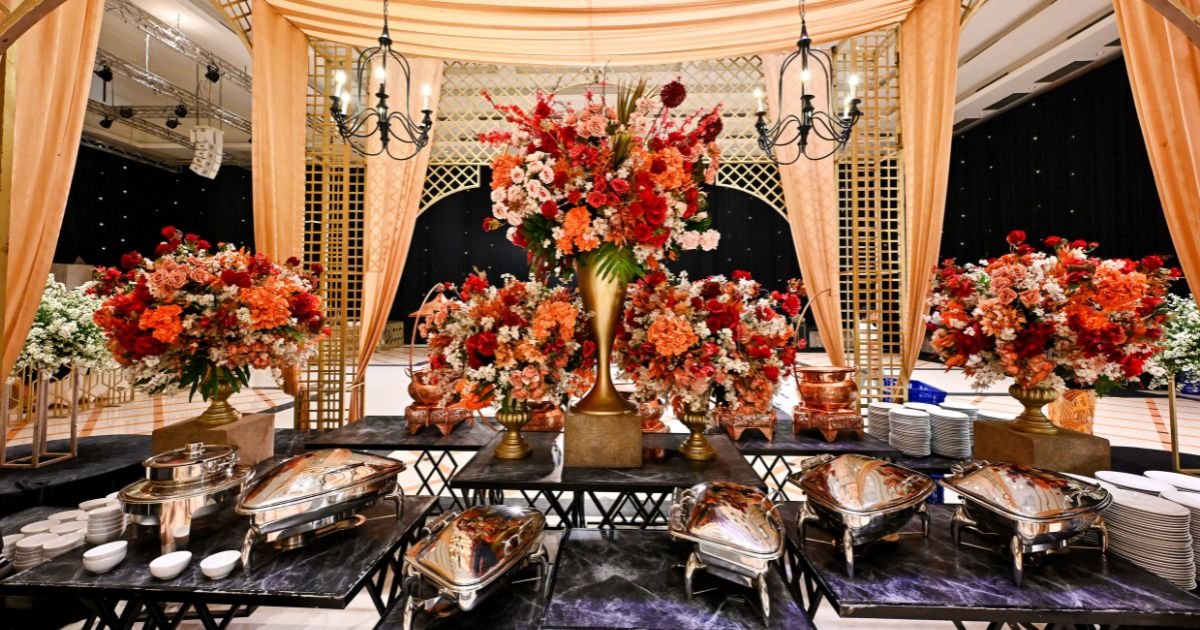
Buffet Catering
Guests serve themselves from multiple food stations.
Best for:
- Large weddings
- Family-style celebrations
- Casual receptions
Buffets offer greater menu variety and flexibility.
Family-Style Service
Large serving dishes are placed on each table for guests to share.
This creates a relaxed and interactive dining experience.
Food Stations
Different stations offer unique cuisines.
Popular examples include:
- Pasta bar
- Taco station
- Sushi bar
- Carving station
- Seafood station
- Dessert station
Food stations encourage guests to mingle throughout the reception.
Cocktail Reception
Instead of a full meal, guests enjoy:
- Hors d’oeuvres
- Canapés
- Small plates
- Signature drinks
- Desserts
This style works well for evening weddings or smaller celebrations.
Popular Wedding Menu Options
Most wedding menus include several courses.
Typical selections include:
Appetizers
Popular starters include:
- Bruschetta
- Mini crab cakes
- Stuffed mushrooms
- Shrimp cocktail
- Cheese boards
- Vegetable platters
Main Courses
Common entrée choices include:
- Grilled chicken
- Beef tenderloin
- Roast lamb
- Salmon
- Pasta
- Vegetarian risotto
Offering two or three entrée options helps accommodate different preferences.
Side Dishes
Popular sides include:
- Roasted vegetables
- Garlic mashed potatoes
- Seasonal salads
- Rice pilaf
- Grilled asparagus
- Fresh bread
Desserts
Beyond the wedding cake, many couples serve:
- Cupcakes
- Macarons
- Cheesecake
- Brownies
- Mini pastries
- Chocolate fountains
Dessert stations remain one of the most popular wedding trends.
Beverage Options
Most catering packages include beverages.
Choices may include:
- Water
- Soft drinks
- Coffee
- Tea
- Juice
- Wine
- Beer
- Signature cocktails
- Champagne toast
Some venues allow outside alcohol, while others require in-house beverage service.
Questions to Ask Before Hiring a Caterer
Before signing a contract, ask:
- Is the menu customizable?
- Do you offer tastings?
- Are beverages included?
- Can you accommodate allergies?
- How many staff members are provided?
- Do you supply plates, glasses, and cutlery?
- What happens if guest numbers change?
- What is your cancellation policy?
Clear communication prevents misunderstandings later.
Signs of a Great Wedding Caterer
A professional caterer should:
- Respond promptly
- Provide transparent pricing
- Offer menu flexibility
- Understand food allergies
- Have positive reviews
- Maintain proper food safety standards
- Communicate clearly
- Arrive on time
Choosing an experienced caterer provides peace of mind on your wedding day.
Wedding Catering Costs: What Should You Expect?
Wedding catering is often one of the largest expenses in a wedding budget. The final cost depends on your guest count, menu selection, service style, location, beverages, and additional services.
Although every wedding is different, understanding what affects catering prices helps you create a realistic budget.
Factors That Affect Wedding Catering Costs
Several elements influence how much you’ll spend.
Guest Count
The more guests you invite, the higher your catering bill.
Remember that costs usually include:
- Food
- Drinks
- Service staff
- Table settings
- Equipment
- Desserts
Creating an accurate guest list early makes budgeting much easier.
Menu Selection
Simple menus cost less than gourmet meals.
For example:
Budget-friendly options include:
- Pasta dishes
- Roasted chicken
- Seasonal vegetables
- Rice dishes
Premium menu options include:
- Filet mignon
- Lobster
- Prime rib
- Fresh seafood
- Imported cheeses
Luxury ingredients naturally increase catering costs.
Service Style
Different catering styles require different staffing levels.
| Service Style | Budget Level | Best For |
| Buffet | £ | Large weddings |
| Family Style | ££ | Relaxed receptions |
| Food Stations | ££ | Interactive weddings |
| Plated Dinner | £££ | Formal weddings |
| Cocktail Reception | ££ | Evening celebrations |
Buffets generally cost less because fewer servers are required.
Wedding Location
Travel fees may apply if your venue is outside the caterer’s normal service area.
Remote venues may also require:
- Portable kitchens
- Extra equipment
- Additional transportation
- More setup time
Season
Peak wedding months often have higher catering prices.
Booking during off-season dates may reduce overall costs.
How to Build a Wedding Catering Budget
Creating a budget helps you prioritize what matters most.
A simple approach includes:
Food
This usually represents the largest catering expense.
Choose a menu that balances quality and affordability.
Drinks
Decide whether you’ll provide:
- Open bar
- Cash bar
- Limited bar
- Signature cocktails only
- Non-alcoholic beverages
Your beverage package can significantly affect the final bill.
Desserts
Many couples now offer dessert tables in addition to a wedding cake.
Popular choices include:
- Cupcakes
- Donuts
- Cookies
- Brownies
- Macarons
- Mini cheesecakes
Service Charges
Professional catering often includes:
- Servers
- Bartenders
- Kitchen staff
- Setup
- Cleanup
Always ask what’s included in your quote.
Sample Wedding Menus
Your menu should reflect your personality and wedding style.
Classic Wedding Menu
Starter
- Caesar salad
- Tomato soup
Main Course
- Grilled chicken breast
- Roasted vegetables
- Garlic mashed potatoes
Dessert
- Wedding cake
- Chocolate mousse
Elegant Wedding Menu
Starter
- Lobster bisque
- Burrata salad
Main Course
- Beef tenderloin
- Herb-crusted salmon
- Seasonal vegetables
Dessert
- Wedding cake
- French macarons
- Mini tarts
Rustic Wedding Menu
Starter
- Charcuterie board
- Artisan bread
Main Course
- Smoked brisket
- BBQ chicken
- Cornbread
- Roasted potatoes
Dessert
- Fruit pies
- Cupcakes
- Cookies
Outdoor Garden Wedding Menu
Starter
- Fresh fruit platter
- Garden salad
Main Course
- Herb-roasted chicken
- Grilled salmon
- Seasonal vegetables
Dessert
- Naked wedding cake
- Fresh berries
Seasonal Wedding Catering Ideas
Using seasonal ingredients often improves quality while reducing costs.
Spring
- Asparagus
- Strawberries
- Peas
- Fresh herbs
Summer
- Watermelon
- Fresh berries
- Grilled vegetables
- Seafood
Autumn
- Pumpkin dishes
- Squash
- Apples
- Roasted root vegetables
Winter
- Braised beef
- Creamy soups
- Roasted potatoes
- Hot chocolate bar
Seasonal menus also create a more authentic dining experience.
Wedding Catering Timeline
Planning ahead reduces stress.
| Time Before Wedding | Task |
| 12 Months | Research caterers |
| 10 Months | Book your caterer |
| 6 Months | Attend menu tasting |
| 3 Months | Finalize menu |
| 1 Month | Confirm guest count |
| 2 Weeks | Review timeline |
| Wedding Week | Confirm final details |
Tips for Planning the Perfect Wedding Menu
Offer Variety
Include several protein options along with vegetarian dishes.
Think About Your Guests
Consider children, older guests, and anyone with food allergies.
Balance Familiar and Unique Foods
Mix classic dishes with a few creative menu items to satisfy everyone.
Keep Portions Appropriate
Guests should leave satisfied without excessive food waste.
Coordinate With Your Theme
Food presentation should complement your wedding style.
For example:
- Rustic weddings suit barbecue or farm-to-table menus.
- Luxury weddings often feature plated multi-course meals.
- Beach weddings pair well with seafood and tropical flavours.
Common Wedding Catering Mistakes
Avoid these planning errors.
Booking Too Late
Popular caterers often book more than a year in advance.
Ignoring Dietary Restrictions
Always ask guests about allergies and dietary preferences before finalizing the menu.
Skipping the Tasting
A tasting lets you evaluate food quality, presentation, and portion sizes before committing.
Forgetting Vendor Meals
Photographers, videographers, DJs, and planners often require meals during long receptions.
Include them in your guest count.
Choosing Quantity Over Quality
A smaller menu with high-quality ingredients usually creates a better guest experience than offering too many average dishes.
Expert Wedding Catering Tips
Professional wedding planners recommend:
- Book early.
- Schedule a tasting.
- Read contracts carefully.
- Confirm service times.
- Review the final guest count.
- Discuss backup plans for outdoor weddings.
- Ask about leftover food policies.
- Confirm setup and cleanup responsibilities.
Small details make a big difference on your wedding day.
Wedding Catering Checklist
Before your reception, make sure you’ve completed these tasks:
- ✅ Booked your caterer
- ✅ Selected your menu
- ✅ Confirmed dietary requirements
- ✅ Scheduled a tasting
- ✅ Chosen beverages
- ✅ Ordered desserts
- ✅ Confirmed guest numbers
- ✅ Reviewed your contract
- ✅ Finalized the reception timeline
- ✅ Confirmed setup and cleanup arrangements
Following this checklist helps ensure a smooth and memorable dining experience.
Key Takeaways
Successful wedding catering starts with thoughtful planning. By setting a realistic budget, choosing the right service style, selecting a menu that reflects your tastes, and working closely with an experienced caterer, you can create a dining experience your guests will remember long after the wedding. Whether you prefer a formal plated dinner, a relaxed buffet, or interactive food stations, careful preparation ensures your reception is both delicious and stress-free.
Conclusion
Wedding catering is one of the most important elements of your reception, bringing family and friends together over a memorable meal. From choosing the right service style and designing a menu to setting a realistic budget and accommodating dietary needs, thoughtful planning helps create an enjoyable dining experience for every guest.
Whether you envision an elegant plated dinner, a relaxed buffet, or interactive food stations, partnering with an experienced caterer ensures everything runs smoothly. By booking early, attending a tasting, and communicating your expectations clearly, you’ll be well on your way to serving a meal that guests will remember long after your wedding day.
Frequently Asked Questions
What is wedding catering?
Wedding catering is a professional service that prepares, delivers, and serves food and beverages for your wedding. Many caterers also provide staff, tableware, bar service, setup, and cleanup to ensure your reception runs smoothly.
When should I book my wedding caterer?
It’s best to book your caterer 9 to 12 months before your wedding, especially if you’re getting married during peak wedding season. Popular catering companies often fill their schedules well in advance.
How much does wedding catering cost?
Wedding catering costs vary depending on your guest count, menu, service style, location, and beverage package. Buffets are generally more affordable than plated dinners, while premium ingredients and full-service catering increase the overall cost.
What is the most popular wedding catering style?
The most popular catering styles include:
- Plated dinners
- Buffet service
- Family-style dining
- Food stations
- Cocktail receptions
Each option offers a different experience, so choose the one that best suits your wedding style and budget.
How do I choose the best wedding caterer?
Look for a caterer with:
- Positive customer reviews
- Experience with weddings
- Flexible menu options
- Transparent pricing
- Professional communication
- Food tasting opportunities
- Proper licenses and insurance
Meeting with several caterers before making a decision is always a good idea.
Should I schedule a menu tasting?
Yes. A tasting allows you to sample the food, review presentation, adjust portion sizes, and make changes before your wedding day.
Can wedding caterers accommodate dietary restrictions?
Most professional caterers can prepare meals for guests with dietary needs, including:
- Vegetarian
- Vegan
- Gluten-free
- Dairy-free
- Nut allergies
- Halal
- Kosher
Provide your caterer with dietary requirements as early as possible.
How many food options should I offer?
Offering two or three main course choices is usually enough. Including one vegetarian or vegan option ensures more guests can enjoy the meal.
Is buffet catering cheaper than plated service?
In most cases, yes. Buffet catering generally requires fewer serving staff and offers more flexibility, making it a cost-effective choice for larger weddings.
What drinks should I serve at my wedding?
Popular beverage options include:
- Water
- Soft drinks
- Coffee and tea
- Wine
- Beer
- Champagne
- Signature cocktails
- Mocktails
Your selection should complement your menu and fit your budget.
Should I provide meals for wedding vendors?
Yes. Photographers, videographers, DJs, planners, and other vendors who work long hours are usually provided with a meal. Confirm vendor meal requirements before finalizing your guest count.
Can I bring my own wedding cake?
Some venues allow outside cakes, while others require desserts to be prepared by approved vendors. Always check your venue’s policies before ordering.
What happens if my guest count changes?
Most caterers allow adjustments until a few weeks before the wedding. Confirm the final deadline for guest count changes in your contract.
What questions should I ask a wedding caterer?
Ask about:
- Menu customization
- Tastings
- Service staff
- Beverage packages
- Equipment rental
- Cleanup
- Overtime fees
- Cancellation policy
- Payment schedule
Clear answers help avoid unexpected costs.
How can I save money on wedding catering?
You can reduce costs by:
- Choosing seasonal ingredients
- Selecting buffet service
- Limiting the bar menu
- Booking during the off-season
- Keeping the guest list manageable
- Serving fewer courses
- Using local caterers
These strategies can significantly lower your catering budget without sacrificing quality.