A backyard wedding can turn a familiar outdoor space into a celebration filled with charm, personality, and meaningful memories. Instead of following strict venue rules, you can design every detail around your style, budget, and love story. From romantic Backyard wedding decorations to relaxed dining and creative entertainment, the possibilities feel almost endless.
However, successful Backyard wedding planning requires more than setting up tables and hanging lights. You also need to consider weather, parking, power, restrooms, and guest comfort. Whether you are planning an intimate At-home wedding or a larger Backyard wedding reception, these 50 inspiring ideas will help you create a beautiful celebration that feels personal, comfortable, and truly unforgettable.
Why Choose a Backyard Wedding?
A backyard celebration feels deeply personal because the location already carries meaning. You may exchange vows beneath a childhood tree or celebrate beside the garden your family planted. Unlike traditional venues, a Backyard wedding venue allows you to shape the atmosphere around your story and personal style.
However, hosting at home requires thoughtful preparation. You must consider parking, power, bathrooms, neighbors, and Wedding guests. Smart Backyard wedding planning can turn these challenges into manageable tasks. You also gain creative freedom over your schedule, vendors, food, and décor without following rigid venue rules.
The Personal and Sentimental Value of an At-Home Celebration
An At-home wedding can make ordinary places feel extraordinary. Your front porch might become an entrance while a favorite tree frames your vows. These personal details create memories that expensive venues cannot easily copy. Better still, you can revisit the location long after your wedding day.
Can a Backyard Wedding Save You Money?
Skipping a traditional venue fee may reduce one major expense. However, rentals can quickly add up. Tables, chairs, generators, lighting, restrooms, and a Wedding tent may cost thousands. Compare complete estimates before assuming your backyard celebration will automatically be cheaper.
The Pros and Cons of Hosting a Wedding at Home
Home weddings offer flexibility, privacy, and meaningful surroundings. On the other hand, you become responsible for infrastructure that established venues already provide. Careful planning matters. Think of your property as a blank canvas that needs power, shelter, sanitation, accessibility, and smooth movement.
How to Plan a Backyard Wedding at Home

Great Backyard wedding ideas begin with practical decisions rather than decorations. First, measure the usable space and estimate how many people can move comfortably. Then consider tables, catering equipment, pathways, restrooms, and emergency access. A crowded yard can quickly become uncomfortable and difficult to manage.
Next, create a realistic budget and timeline. Check Local permits, noise ordinances, insurance requirements, and parking restrictions in your city or county. Rules vary across the United States. Contact the appropriate local authority before booking vendors or sending invitations.
1. Set a Realistic Backyard Wedding Budget
Create separate estimates for rentals, food, lighting, sanitation, entertainment, landscaping, and cleanup. Leave room for unexpected costs. A damaged lawn or last-minute generator rental can stretch your budget. Comparing home-wedding expenses with traditional venue packages gives you a clearer financial picture.
2. Determine Your Space and Guest Capacity
Measure your property before finalizing the guest list. Account for chairs, tables, food service, pathways, and entertainment areas. Your Wedding guests need enough room to move naturally. A smaller guest list often creates a warmer atmosphere while reducing pressure on limited outdoor space.
3. Divide the Property Into Functional Wedding Zones
Give each area a clear purpose. One section can host the ceremony while another handles cocktails and dinner. This approach improves traffic flow. It also makes your Backyard wedding reception feel larger because guests experience several distinct settings throughout the celebration.
4. Check Local Permits, Noise Ordinances, and Insurance
Research Local permits before signing vendor contracts. Some areas regulate amplified music, temporary structures, street parking, or large gatherings. You may also need event insurance. Confirm requirements directly with your local government because regulations can differ between cities, counties, and homeowners associations.
5. Inform Your Neighbors Before the Wedding
Friendly communication can prevent unnecessary conflict. Tell nearby neighbors about the date, expected hours, parking arrangements, and music schedule. A thoughtful conversation shows respect. Some couples even offer a small gift or invitation, which can turn potential complaints into cheerful support.
6. Plan Parking and Guest Transportation
Most residential streets cannot handle dozens of extra vehicles. Consider a nearby legal parking area with shuttle transportation. Ride-share instructions can also help. Keep driveways and emergency access routes clear. Good transportation planning creates a smoother arrival and departure for everyone.
Backyard Wedding Ceremony Ideas
Your Backyard wedding ceremony should highlight what makes the property special. Instead of hiding every natural feature, use mature trees, gardens, porches, and architecture as part of the setting. These elements can create an authentic Outdoor ceremony without requiring excessive decorations.
Think carefully about sunlight and guest visibility. Visit your ceremony location at the exact time you plan to marry. Notice shadows, glare, wind, and background distractions. This simple rehearsal can help you choose the strongest layout for photographs and Floral arrangements.
7. Tie the Knot Beneath a Meaningful Tree
A mature tree creates a natural ceremony focal point. Add subtle flowers or fabric rather than covering its character. If the tree holds family memories, share that story during the ceremony. Meaningful surroundings can give your vows an emotional depth that rented décor cannot manufacture.
8. Use Your Home as a Beautiful Ceremony Backdrop
A charming house can become part of the design. Position your ceremony near attractive doors, brickwork, or garden walls. Thoughtful Wedding décor ideas can enhance existing architecture while keeping the setting authentic. Test camera angles beforehand to avoid distracting objects in photographs.
9. Line the Wedding Aisle With Growing Flowers
Potted plants and seasonal blooms can define the aisle naturally. Unlike cut flowers, living plants can survive beyond the celebration. Choose varieties suited to your climate. Afterward, plant them in your garden as a lasting reminder of your wedding day.
10. Decorate the Front Porch for Your Ceremony
A porch can become an intimate ceremony stage with fabric, greenery, candles, or Floral arrangements. Keep the design proportional to the house. Heavy décor may overwhelm a small porch while a few intentional details can create a polished and welcoming setting.
11. Create a Memorable Entrance From Your Front Door
Your own front door can create a surprisingly dramatic entrance. Guests already know where to look while you enjoy a private indoor waiting area. Add music and thoughtful timing. That familiar doorway can suddenly feel like the entrance to an entirely new chapter.
12. Include Your Pets in the Ceremony
Home celebrations make pet participation easier. Your dog might walk down the aisle or appear briefly in photographs. Assign a trusted person to handle feeding, water, and supervision. Pets can become overwhelmed by noise and crowds, even inside familiar surroundings.
13. Plan a Sentimental First Look at Home
Choose a private place with personal meaning, such as your childhood bedroom, garden, or porch. A first look at home can feel intimate and calm. It also gives your photographer a chance to capture the emotional connection between your relationship and the property.
14. Create a Creative Newlywed Exit
Finish the celebration with an exit that suits your location. Walk through a pathway of lights or leave in a vintage family car. Avoid materials that damage the lawn or create difficult cleanup. The best exits feel joyful without becoming a logistical headache.
Backyard Wedding Decoration Ideas
The strongest Backyard wedding decorations complement your surroundings instead of fighting them. Start with the colors, plants, architecture, and textures already present. Then add carefully chosen elements that strengthen the atmosphere. This approach often looks more refined than filling every empty corner with décor.
Lighting can completely reshape a familiar yard after sunset. String lights, lanterns, and battery-powered candles create warmth while improving visibility. However, decorative lighting should never replace practical illumination around steps, pathways, restrooms, and food-service areas.
15. Illuminate the Backyard With String Lights
Hang String lights above dining areas or between sturdy structures. Their warm glow can create an intimate ceiling over an open space. Always use outdoor-rated equipment and professional installation when necessary. Secure cables carefully so guests never trip over exposed cords.
16. Repurpose Indoor Furniture for Wedding Décor
A beloved side table, rug, or armchair can add warmth outdoors. These familiar pieces make an At-home wedding feel genuinely personal. Protect valuable furniture from moisture and unstable ground. Rental furniture may work better when weather conditions look unpredictable.
17. Use Plants and Seasonal Flowers as Centerpieces
Seasonal plants often blend naturally with the surrounding landscape. Use potted herbs, garden flowers, or locally grown blooms. Creative Floral arrangements can add texture without overwhelming tables. Potted centerpieces can also be replanted or given to guests after the celebration.
18. Create a Cohesive Backyard Wedding Theme
Choose a visual direction that suits your property. A rustic garden theme may complement an older home while minimalist décor can sharpen a modern yard. Repeat a few colors and materials throughout the space. Consistency creates harmony without making every detail look identical.
19. Add Personal and Sentimental Décor
Display family photographs, handwritten notes, heirlooms, or meaningful objects. Personal touches give Wedding décor ideas emotional substance. However, avoid turning every surface into a display. A few carefully placed memories often tell your story more effectively than dozens of unrelated decorations.
20. Decorate Existing Trees and Landscaping
Use the landscape as your starting point. Trees can hold lights while garden borders can guide guests naturally. Avoid damaging branches or plants with heavy fixtures. The goal is enhancement, not disguise. Your existing greenery already provides texture that many traditional venues must purchase.
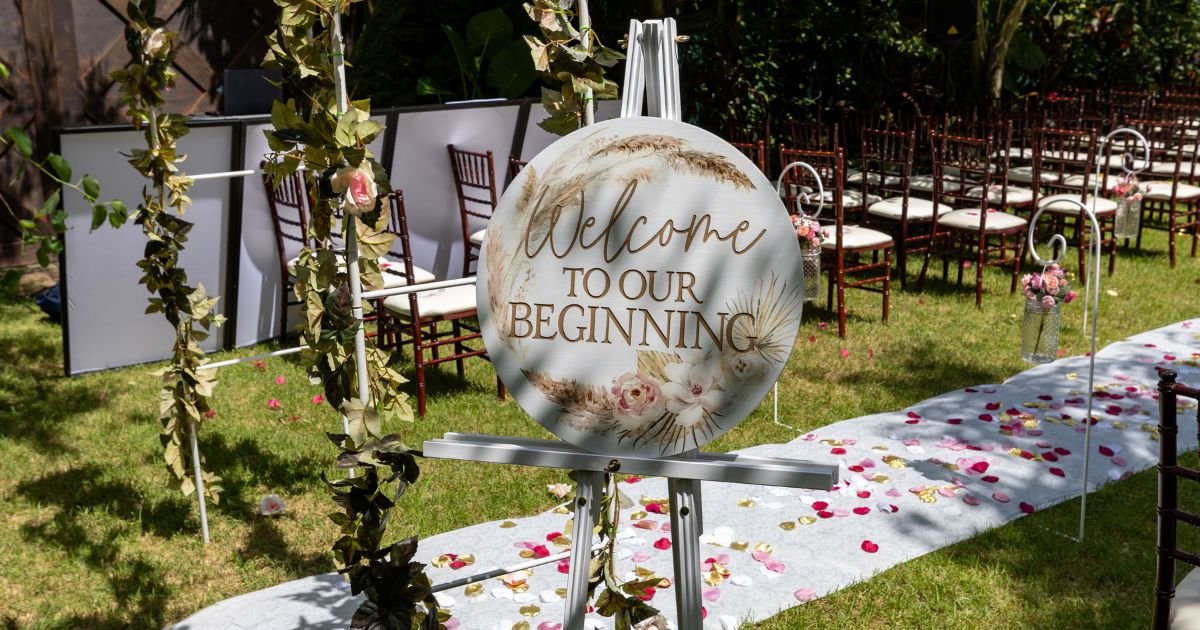
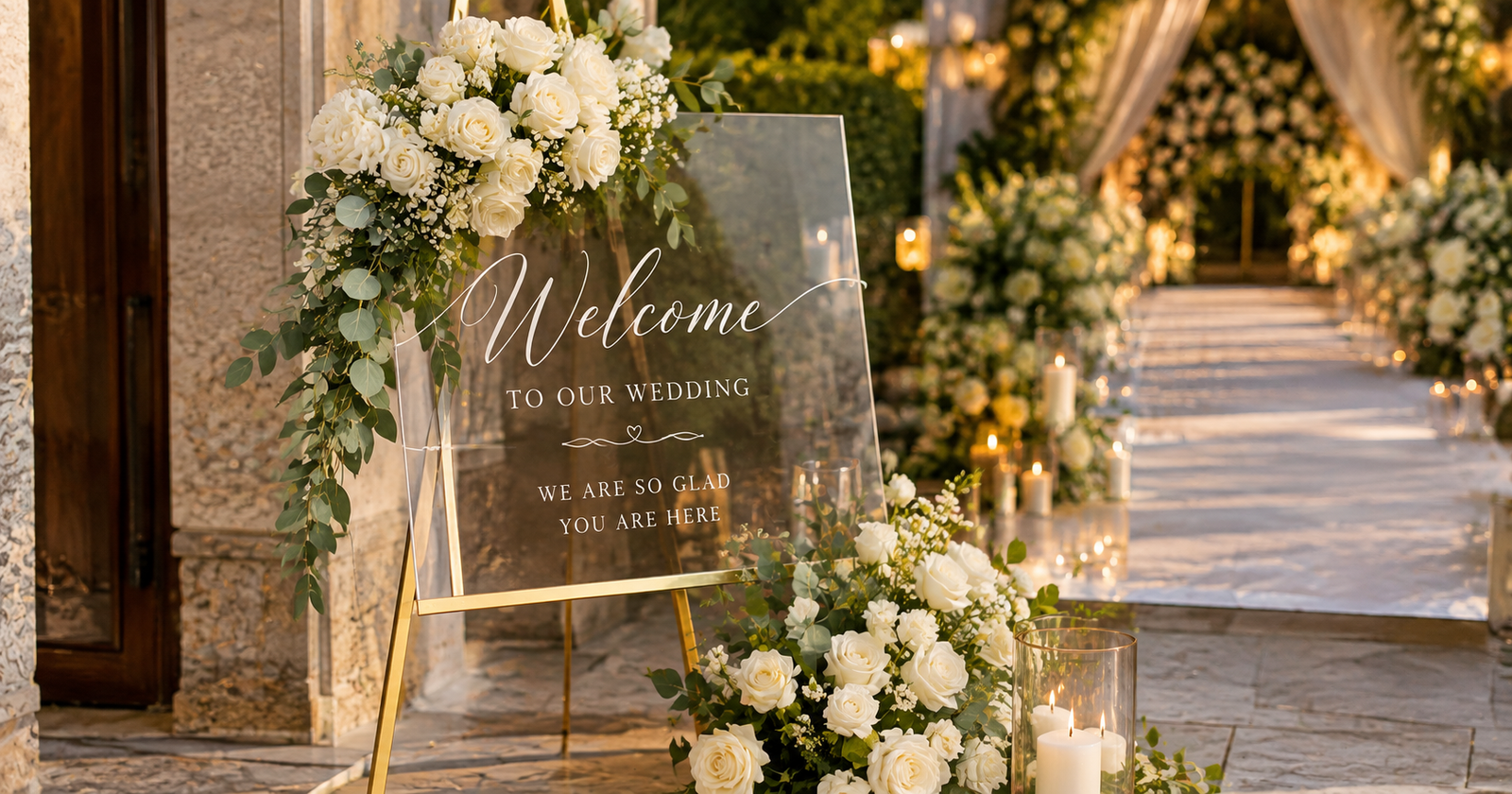
21. Use Meaningful Signage Throughout the Property
Signs can guide guests toward the ceremony, restrooms, drinks, and reception. Match their style with your overall design. Clear wording matters more than elaborate calligraphy. Good signage quietly solves problems before guests need to ask someone for directions.
22. Transform Your Swimming Pool Into a Focal Point
A pool can reflect lighting beautifully after sunset. Floating flowers or safe decorative elements can enhance its appearance. Never sacrifice safety for style. Keep walkways visible and consider barriers when children attend. Your pool should become an asset rather than a hazard.
23. Use Your Own Dinnerware and Family Heirlooms
Family china, glassware, or serving pieces can make dinner feel deeply personal. Mix patterns carefully for a collected look. However, valuable heirlooms may not suit large gatherings. Use treasured pieces selectively while renting durable items for the majority of guests.
24. Embrace the Natural Beauty of Your Backyard
Sometimes less truly does more. A blooming garden or sweeping lawn may need little decoration. Trim overgrown plants and remove visual clutter before adding anything new. Good Backyard wedding decorations should frame your surroundings rather than bury them beneath unnecessary layers.
Backyard Wedding Reception and Entertainment Ideas

A successful Backyard wedding reception needs energy and comfortable flow. Give guests clear places to eat, talk, dance, and relax. Separate louder entertainment from quieter conversation areas whenever possible. Thoughtful zoning prevents one activity from overwhelming the entire celebration.
Entertainment should match your space and neighborhood. A full band creates excitement but requires power and room. An acoustic musician may suit an intimate gathering better. Whatever you choose, check noise restrictions and build the entertainment schedule around local rules.
25. Turn Your Patio Into a Dance Floor
A flat patio can become a natural Dance floor without extra installation. Move unnecessary furniture away and test the surface beforehand. Add lighting around the perimeter. Keep speakers positioned carefully so music reaches dancers without blasting nearby homes.
26. Rent a Professional Outdoor Dance Floor
Grass can become uneven or muddy after hours of foot traffic. A rented Dance floor provides a stable surface and defines the entertainment zone. Professional installers can level the structure properly. This investment becomes especially valuable when guests wear formal shoes.
27. Build a Cozy Backyard Lounge Area
Create a quieter zone with sofas, chairs, and small tables. Older guests often appreciate a comfortable place away from loud music. Position the lounge close enough to feel connected while keeping it separate from heavy traffic and speakers.
28. Set Up Long Banquet Tables
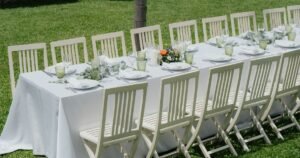
Long tables create a communal dinner atmosphere and can use narrow spaces efficiently. They also encourage conversation among guests. Measure carefully before renting them. Leave enough room behind chairs so servers and guests can move without constant squeezing.
29. Create Fun Lawn Games for Guests
Simple games can entertain guests during cocktail hour. Choose activities that suit your available space and audience. Keep games away from dining tables and fragile décor. A relaxed activity can help people from different families mingle before dinner begins.
30. Hire a Live Band or Local Musician
Live music brings immediate personality to an outdoor celebration. Before booking performers, confirm their space, power, shelter, and sound requirements. Local musicians may also understand neighborhood restrictions better. Always create a weather-safe area for instruments and electrical equipment.
31. Use Different Areas for Each Part of the Celebration
Moving guests between spaces creates a sense of discovery. Host cocktails near the front yard before leading everyone toward dinner. Later, shift dancing into a smaller area. Each transition refreshes the atmosphere and helps your property feel more expansive.
32. Host the After-Party in a Cozy Outdoor Space
As the crowd becomes smaller, move remaining guests into a more intimate area. A patio or covered porch works well. Lower music levels as the evening progresses. This approach keeps the late-night celebration lively without making a small group feel lost.
Backyard Wedding Food and Drink Ideas
Food can define the personality of your celebration. A backyard setting works beautifully with relaxed menus, family recipes, local ingredients, and interactive service. However, professional Wedding catering still requires refrigeration, preparation space, electricity, clean water, and safe food-handling procedures.
Discuss the property with your caterer before finalizing the menu. A home kitchen may not support large-scale service. Your team might need a temporary preparation area. Smart planning keeps food fresh while preventing servers from constantly crossing guest pathways.
33. Host a Relaxed Backyard Wedding BBQ
A barbecue can feel festive without becoming overly formal. Serve smoked meats, grilled vegetables, and regional favorites. Professional Wedding catering can elevate familiar comfort food through polished presentation. Consider dietary restrictions so vegetarian and allergy-friendly options receive equal attention.
34. Serve a Family-Style Wedding Dinner
Large shared platters encourage conversation and create a welcoming atmosphere. Ensure tables have enough room for dishes, flowers, and place settings. Family-style service also requires careful portion planning. Your caterer should calculate quantities to prevent shortages at later tables.
35. Create a Stylish Self-Serve Drink Station
A drink station can reduce lines at the bar. Offer water, lemonade, iced tea, or other refreshments in clearly labeled dispensers. Keep ice and glassware replenished. Place the station away from narrow pathways because popular self-service areas can quickly create congestion.
36. Serve Homemade Desserts With a Personal Story
Family recipes can make dessert more meaningful. Perhaps your grandmother’s pie or childhood cookies belong on the table. For food safety and large quantities, work with professionals when necessary. A short sign can explain the story behind each sentimental treat.
37. Feature Local American Food and Seasonal Ingredients
Celebrate your region through food. A Maine wedding might feature lobster while a Texas celebration could embrace barbecue. Seasonal produce often tastes better and travels less. Regional flavors also give out-of-town guests a memorable sense of place.
38. Bring in a Favorite Local Restaurant or Food Truck
A beloved restaurant or food truck can add personality to your menu. Confirm that the vehicle can access and safely park near the property. You should also check licensing requirements. Late-night food works especially well when guests have spent hours dancing.
How to Keep Guests Comfortable at a Backyard Wedding
Beautiful styling means little when guests feel uncomfortable. Prioritize Guest comfort through seating, shade, restrooms, lighting, and easy navigation. Walk through the property from a visitor’s perspective. Small obstacles you normally ignore may become difficult for elderly guests or people with mobility needs.
Weather also affects comfort throughout the day. Temperatures can change quickly after sunset. Offer practical solutions before guests need them. Fans, blankets, water stations, and covered seating can transform a challenging environment into an enjoyable celebration.
39. Provide Clean and Accessible Restrooms
Most homes lack enough bathrooms for a large event. Upscale portable restroom trailers can provide sinks, lighting, mirrors, and climate control. Place them somewhere accessible but discreet. Confirm that guests with mobility needs can reach and use the facilities comfortably.
40. Create Clear and Well-Lit Paths for Guests
Uneven lawns become harder to navigate after dark. Mark routes between major areas and add practical lighting. Keep cables covered and obstacles removed. Clear paths protect Wedding guests while helping the event flow naturally from one space to another.
41. Offer Shade, Fans, Heaters, or Blankets
Match comfort supplies to the season. Summer celebrations may require shade and fans while autumn evenings can become surprisingly cold. Monitor the forecast closely. Small details such as water stations or lightweight blankets can greatly improve Guest comfort.
42. Provide Comfortable Seating and Lounge Areas
Not every guest wants to dance for hours. Mix dining chairs with softer lounge seating when space allows. Place some seats away from speakers. Comfortable conversation areas give grandparents, parents, and tired dancers a place to recharge.
43. Set Up a Practical Waste and Cleanup Plan
Large celebrations create more waste than most households can handle. Coordinate bins, recycling, food disposal, and post-event pickup before the wedding. Ask vendors who handles each cleanup task. A clear plan prevents overflowing trash from spoiling the atmosphere.
Prepare for Weather and Unexpected Challenges
Outdoor celebrations always carry uncertainty. A reliable Rain plan should protect guests, food, electrical equipment, and important décor. Do not wait until the wedding morning to invent one. Decide in advance when weather conditions will trigger your backup setup.
Beyond rain, consider heat, wind, cold, insects, and soft ground. A sturdy Wedding tent may provide shelter while flooring protects formal shoes from mud. Backup power also matters because residential electrical systems may struggle with catering equipment, lighting, and entertainment simultaneously.
44. Create a Detailed Backyard Wedding Rain Plan
Your Rain plan should identify where every major activity moves during bad weather. Tell vendors about the backup layout early. Consider how guests will travel between covered areas. A plan only works when everyone understands it before clouds appear.
45. Rent a Tent Before Bad Weather Becomes a Problem
A quality Wedding tent can protect dinner and entertainment from light rain or strong sun. Reserve early during popular wedding seasons. Ask professionals about anchoring, flooring, sidewalls, and wind limits. Not every tent remains safe during severe weather.
46. Arrange Backup Power and Enough Outdoor Lighting
Calculate power needs with your vendors. Catering equipment, music, refrigeration, and lighting can overload household circuits. A professional generator may provide essential backup. Place equipment safely away from guests while following manufacturer and vendor safety requirements.
47. Prepare for Wind, Heat, Cold, and Mud
Weather problems extend far beyond rain. Secure lightweight décor against wind and provide shade during extreme heat. Keep blankets ready for cold evenings. Temporary flooring or pathways can help after heavy rain turns grass into mud.
How to Transform a Small Backyard Into a Wedding Venue
A Small backyard wedding can feel intimate rather than cramped when every area serves a purpose. Start by reducing unnecessary furniture and visual clutter. Choose a guest count that genuinely fits the property instead of forcing a large celebration into limited square footage.
Use vertical decorations, compact tables, and nearby indoor spaces strategically. Good Outdoor wedding ideas focus on movement as much as appearance. When guests can travel comfortably between ceremony, dining, and entertainment areas, even a modest yard can feel surprisingly spacious.
48. Use Space-Saving Furniture and Smart Layouts
Choose narrow tables and appropriately sized chairs. Avoid oversized lounge furniture that consumes valuable room. Measure every rental item before booking it. A simple scaled floor plan can reveal layout problems long before delivery trucks arrive.
49. Make Use of the Front Yard, Patio, and Indoor Areas
Your celebration does not need to stay behind the house. Use the porch for cocktails or an indoor room for quiet seating. Spreading activities across several suitable areas reduces crowding and gives your Small backyard wedding a more dynamic flow.
50. Create the Illusion of More Space With Strategic Décor
Keep pathways open and avoid excessive floor-level decorations. Vertical greenery, overhead lighting, and a consistent color palette can make the setting feel cohesive. Strategic Wedding décor ideas guide the eye without consuming valuable space. In small yards, restraint often creates the strongest visual impact.
Final Tips for Planning the Perfect Backyard Wedding
The best Backyard wedding ideas balance beauty with practical preparation. Start early, measure everything, and communicate clearly with vendors. Walk through the entire celebration from arrival to departure. This simple exercise often reveals hidden issues involving lighting, parking, power, bathrooms, or accessibility.
Most importantly, allow the location to tell part of your story. Thoughtful Backyard wedding planning does not require transforming your home beyond recognition. Instead, enhance what already makes it meaningful. When comfort, personality, and preparation work together, your backyard can host a truly unforgettable celebration.
Create a Detailed Wedding-Day Timeline
Build a timeline that includes vendor arrivals, setup, photographs, the ceremony, dinner, dancing, and cleanup. Add extra time between major transitions. Home events often involve tighter spaces, so a realistic schedule helps vendors work efficiently without disrupting guests.
Hire Vendors With Experience in At-Home Weddings
Experienced vendors understand the hidden challenges of residential events. They know how to manage limited power, uneven ground, temporary kitchens, and neighborhood restrictions. Ask potential vendors about previous home celebrations and request examples of how they solved unexpected logistical problems.
Walk Through the Property Before the Wedding Day
Complete a final walkthrough with key vendors. Check access points, electrical needs, lighting, emergency routes, and backup spaces. Imagine the property after dark as well. A beautiful daytime layout may require important adjustments once natural light disappears.
Focus on Personal Details That Make the Celebration Yours
Trends come and go while meaningful details endure. Include family traditions, favorite foods, treasured photographs, or places around the property that matter to you. The finest backyard celebration does not imitate a ballroom. It turns a familiar home into a setting that feels unmistakably yours.
FAQs
How to host a backyard wedding?
Plan your budget, guest count, layout, catering, parking, restrooms, and weather backup. Create separate areas for the ceremony, dining, and entertainment.
What are the three types of weddings?
Three common types are civil, religious, and secular weddings. Each type differs based on legal requirements, traditions, and personal beliefs.
How much do you give at a backyard wedding?
In the U.S., guests commonly give around $50 to $200, depending on their relationship with the couple and personal budget.
How many people are at a backyard wedding?
A backyard wedding may host anywhere from 10 to 100 or more guests. The ideal number depends on the property’s usable space and facilities.
What to buy for a backyard wedding?
Common essentials include tables, chairs, lighting, decorations, serving supplies, signage, and weather protection. Your exact needs depend on what vendors already provide.